Research on the cascade risks of the transition.
Independent research on the cascade and compound risks of the energy transition — how stress propagates across coupled energy, grid, finance and climate systems, and into the communities they serve. It underpins our valuation and compliance work, and it is available to institutions on mandate.
Risk, resilience — and whether the intervention proves maladaptive.
How stress propagates
A shock in one system — energy, grid, finance, climate — travelling into the others, and into the communities they serve.
Absorb & recover
Whether a node can take the shock and come back — scored on the SSI resilience axis and its modifiers, before and after the asset.
Does the intervention create new risk?
A governance gate that checks the adaptation itself — the new asset, the new policy — doesn't open fresh systemic vulnerabilities. The W1–W10 anti-maladaptation surface.
The research engine, and its outputs.
Strategic Briefs
Open research on cascade and compound systemic risk — the thought-leadership that grounds the platform, free to read.
Bespoke studies
Commissioned systemic-risk analysis on your own assets, portfolios or exposures — scoped and delivered to brief.
Peer-reviewed method
Methodology published in the academic literature (JIPR, ERE) and housed in a non-profit foundation for independence.
Cascade and compound risk — the mechanism, shown.
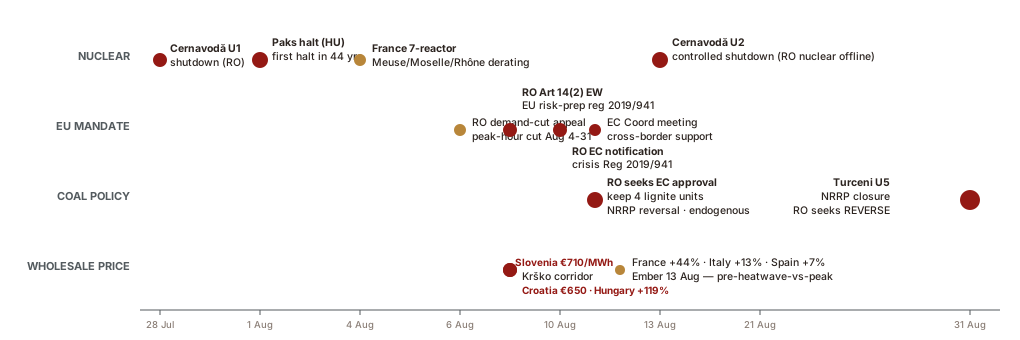
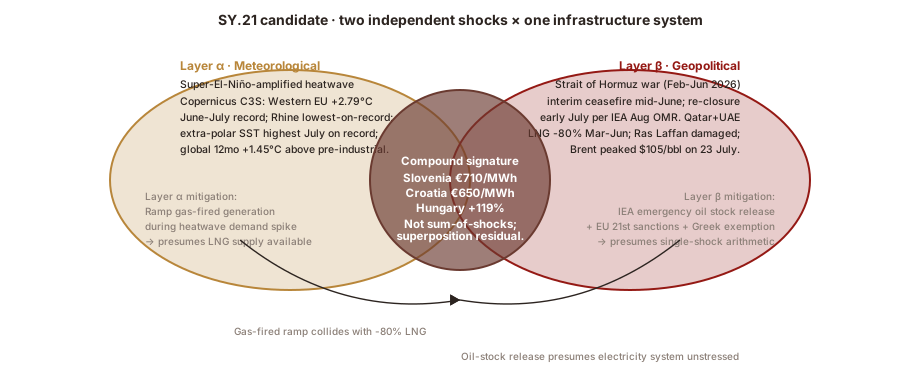
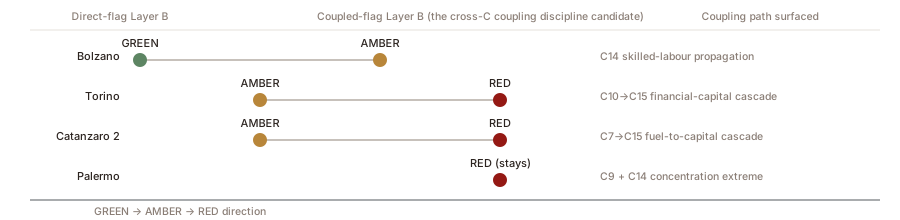
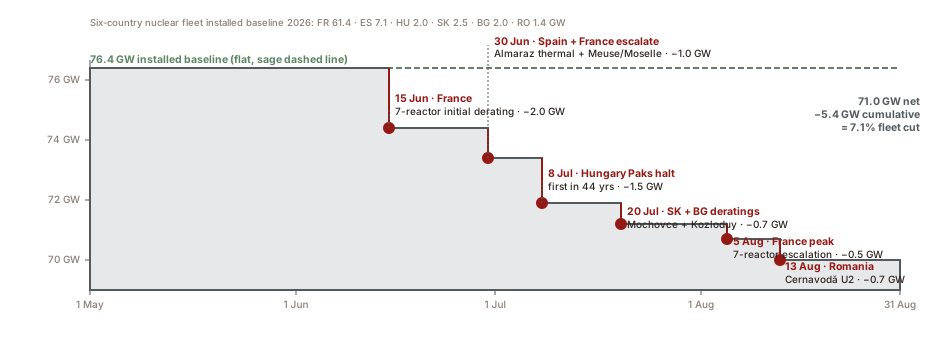
Four reads from the summer-2026 systemic record: how a shock travels, how independent shocks superimpose, and why a coupled reading surfaces risk a direct one misses. Every figure traces to public reporting.
The spine under the analytics.
The valuation and compliance products rest on the same systemic view: value and risk are properties of a coupled system, not a single asset. The research engine is what lets us score a node, value what it can flow, and stress-test it against cascade and compound risk — and it is the credibility behind every number we publish.